Fave dei morti C · Cugino
Little almond "beans of the dead" for early November — baked once, one entry in Italy’s crowded November calendar of biscuits for the dead. → Umbria, in the Atlas

Italy’s sweet season opens on the second of November, with biscuits shaped like bones — and in Sicily, with gifts the dead leave for children overnight.
American calendars treat early November as the pause between holidays. The Italian biscuit calendar treats it as an opening night. All Saints and All Souls — Ognissanti and i Morti — arrive with their own fixed repertoire of sweets, distinct region by region, and the season that ends at Epiphany starts here, in the most matter-of-fact conversation with mortality any cuisine keeps.
In Sicily the dead do the giving. Children prepare a basket — the cannistru — and wake on the second of November to find their departed relatives have filled it in the night: sugar figures, marzipan fruit, pomegranate, dried figs, chestnuts, and the bone-biscuits themselves. The tradition raises children on the least morbid version of mourning ever devised — the dead as generous houseguests who visit once a year and bring cookies.
The ossa di morto in the basket earn their name twice over. Gambero Rosso’s telling of the tradition prints the verdict as Sicilians deliver it — “duri, duri sono”, hard, hard they are — and the making explains the look: a syrup-and-spice dough, no fat and no egg, rested for days and then baked low, so that it separates in the oven into a white, brittle crown riding a caramelized base. A biscuit that assembles its own skeleton in the heat. It is nearly inedible dry, and correct after ten seconds in moscato — which is the design, not a defect.
Every entry below is drawn from the Atlas, where its class, its region and its sources live. The pattern worth noticing: the biscuits of the dead are overwhelmingly Class B — dense once-baked dunkers, built lean, because a memorial biscuit was never meant to be a pleasure eaten quickly.
Little almond "beans of the dead" for early November — baked once, one entry in Italy’s crowded November calendar of biscuits for the dead. → Umbria, in the Atlas
Tri-colored little "beans" for the days of the dead, a Habsburg-era Trieste tradition. Baked once, eaten by the handful. → Friuli-Venezia Giulia, in the Atlas
Fennel-spiced rounds for Saint Martin’s day, the hard version made expressly to drown in moscato di Pantelleria. → Sicilia, in the Atlas
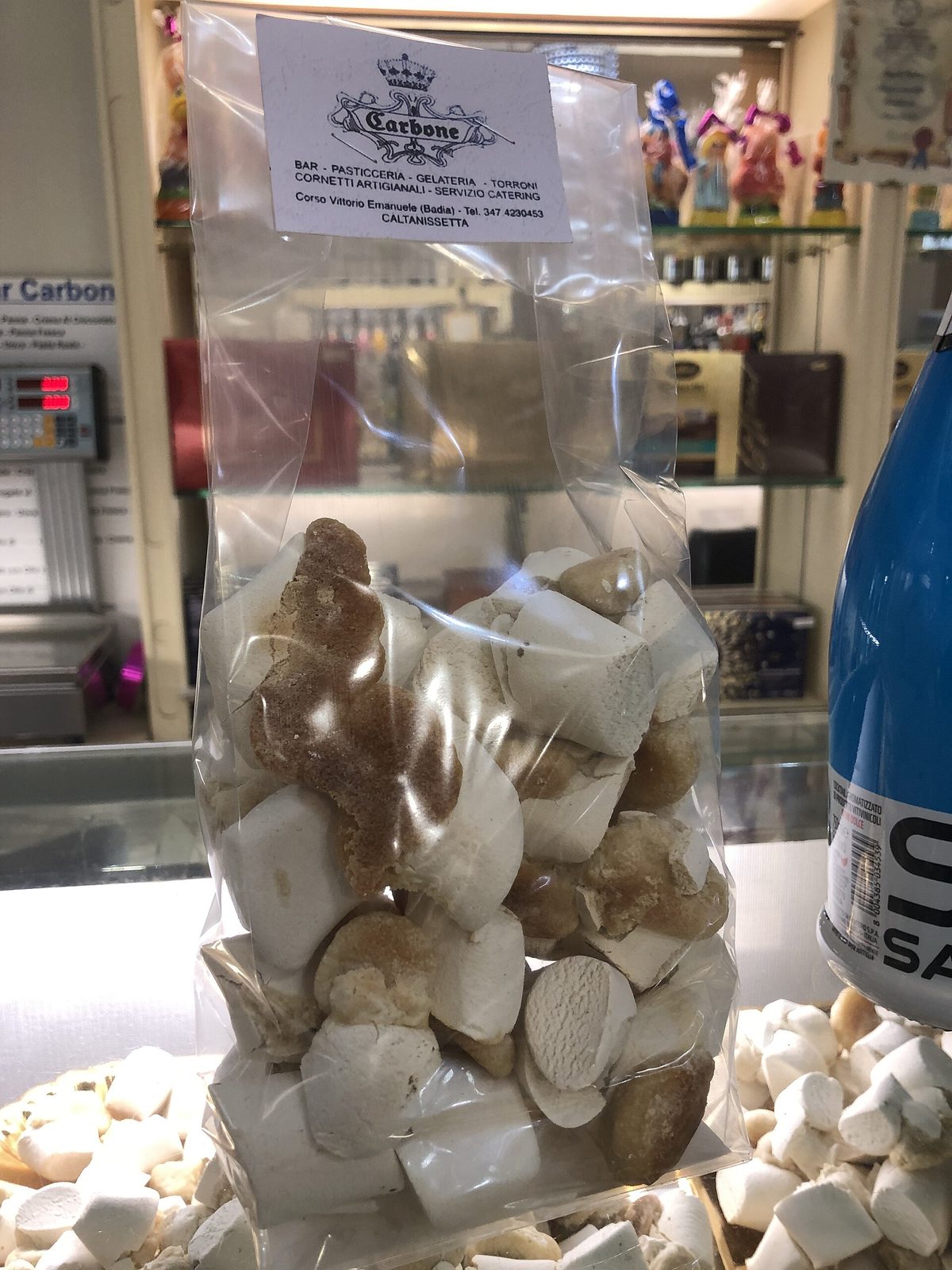
The "bones of the dead": sugar-crusted, clove-scented, and nearly inedible dry. Correct after ten seconds in moscato. → Sicilia, in the Atlas
Sugar- and cocoa-glazed biscuits of the days of the dead, eaten by the mixed handful from every Palermo tray. → Sicilia, in the Atlas
Read the calendar forward and the logic of the whole Italian winter shows itself: the lean memorial biscuits of November, the feast diamonds of December, the fried extravagance of Carnival, the austerity of Lent. Sweetness in Italy is not a constant background hum, as it is on the American shelf; it is scheduled, rationed, and meaningful, and the biscuits of the dead are the downbeat that starts the music. The Christmas table makes more sense once you know what came four weeks before it.
“Italy’s sweet season opens on November 2nd, not at Christmas: the biscuits of the dead — ossa di morto, papassini, tetù, favette — form a fixed regional repertoire, overwhelmingly lean, once-baked and wine-dunked by design.”
Bounds of this page: the cannistru tradition is reported as tradition, from the cited Italian source; regional practice varies household by household, and we have not stood in a Palermo kitchen on the first of November. When we have, this page will say so.