Savoiardi sardi · Pistoccus B · Da inzuppo
Large airy egg biscuits whose island names — pistoccus, pistokkus, pistoccheddus — descend directly from the Latin biscoctus. The etymology alone earns them their plate in this atlas.

Where the very name of the biscuit — pistoccu — descends from biscoctus, and the savoiardo grew to giant size.
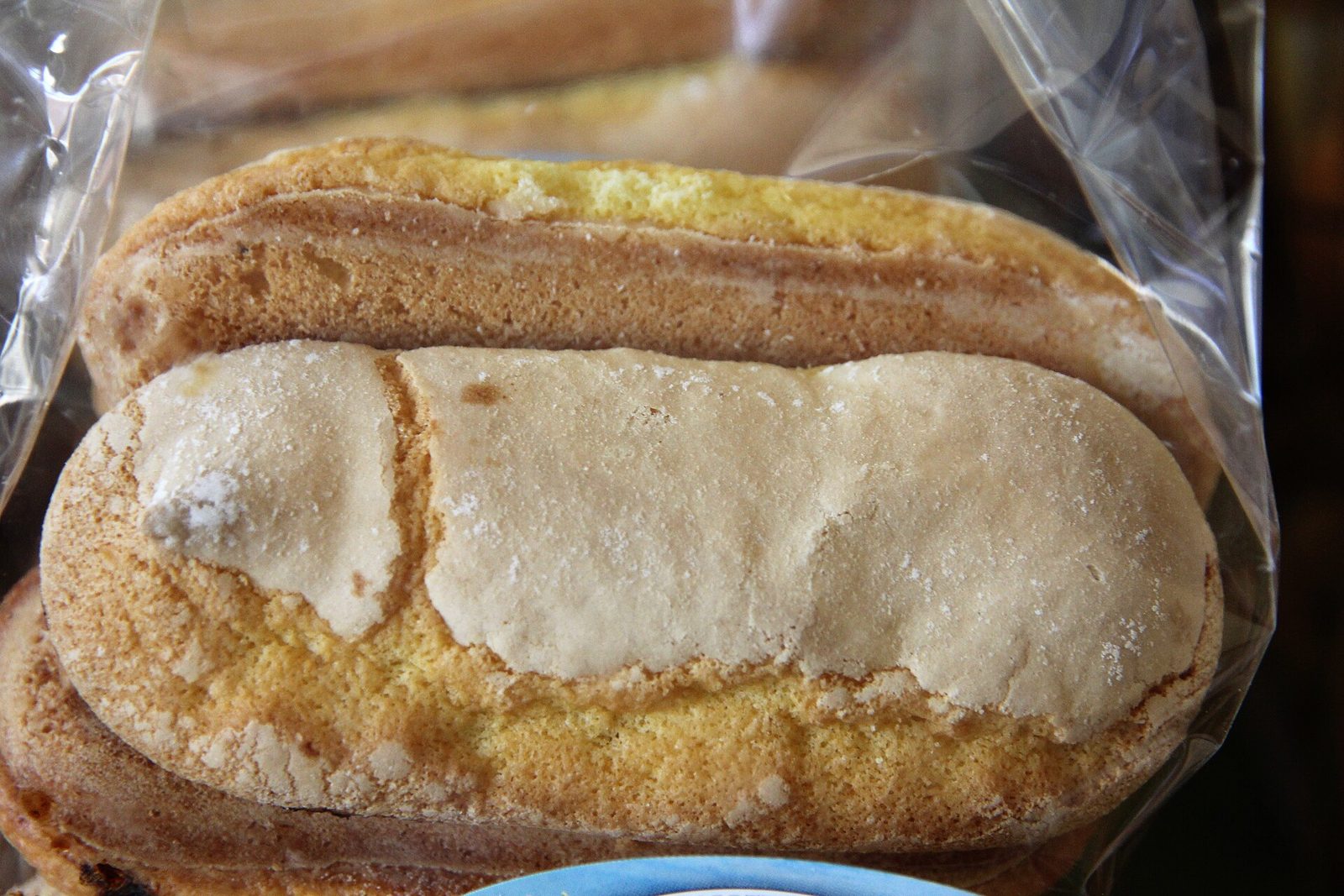
Large airy egg biscuits whose island names — pistoccus, pistokkus, pistoccheddus — descend directly from the Latin biscoctus. The etymology alone earns them their plate in this atlas.
The giant savoiardo of Fonni in the Barbagia, with its own official regional product sheet: a biscuit with paperwork.
Raisin-walnut-sapa lozenges under white glaze, baked across the whole island for All Saints — baked for All Saints, as much of Italy bakes for its dead in early November. Papassa is the raisin.
Confirmed against Sardinia’s own official product sheet, and it corrected us twice. The twice-bake is real and the sheet spells it out — shape a long loaf, bake at 200–220°C, cool, slice at two centimetres, return to the oven. But we had called the technique distinct from the mainland’s, and it is not: that is the Prato method exactly. What is distinct is the composition — durum-wheat flour and lard, both departures from the Tuscan formula. And the aromatic seed is wild fennel; anise enters as a liqueur, and through the name. Registered island-wide, and traditionally eaten by men, the sheet says, because it is dry enough to take malvasia.
The atlas cites Italian primary and regional sources throughout. Claims resting on tradition rather than documents are phrased as claims; entries awaiting confirmation say so on their face.