
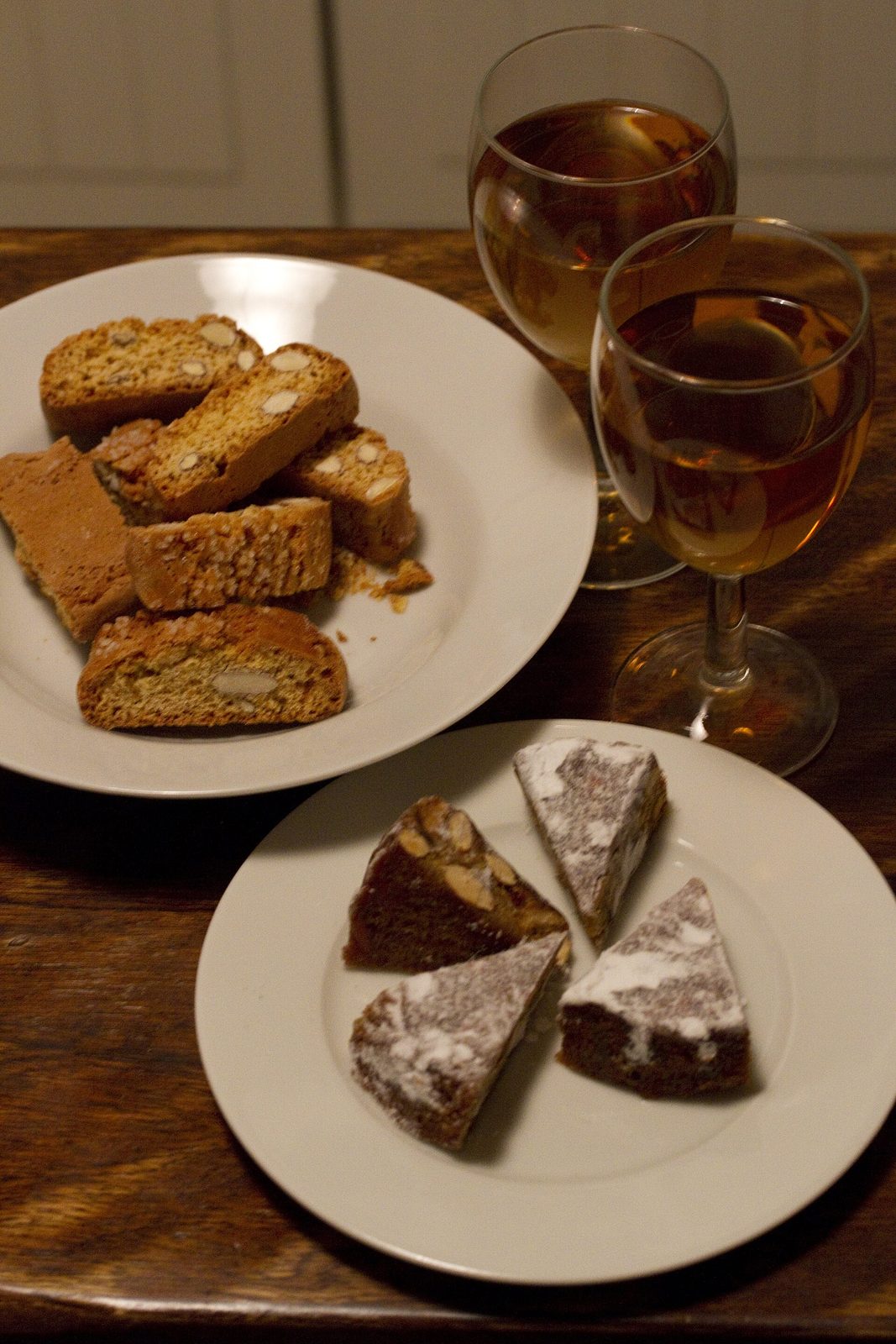
The archetype of the entire family: a log of flour, sugar, eggs and whole unpeeled almonds, baked, cut on the bias, and returned to the oven. Fixed in its modern form at Antonio Mattei’s shop in Prato, open since 1858. The EU-protected Cantuccini Toscani IGP requires butter and leavening by law; the plain Prato original contains neither. The argument between them has been legal since 2016.
Toscana
The region that named the whole category — and then spent a century arguing with itself about what the name means.
Cocoa alphabet letters for Lent, credited to a Florentine convent: egg white, no fat, baked once. The letters were the treat: children spelled their names in penance season.
Walnut, candied fruit, anise and spice — the osteria biscuit Sienese archives call berricuocoli. Hard when aged, softened the proper way: held under the vin santo until it gives.
Soft almond-paste lozenges with their own IGP. Not twice-baked, not a dunker, endlessly confused with the family — named here precisely so we can say, with love, that they are not biscotti.
Anise wafers pressed thin at Tuscan fairs since the sixteenth century. A cousin by marriage: crisp, anise-scented, and never near an oven twice.
…burro per non meno dell’1,5% … e agenti lievitanti q.b.
Butter, not less than 1.5 percent, and leavening agents as needed — mandatory, by European law, in the protected cantuccino. The full annotated translation lives in the Archive.
Disciplinare di produzione, Art. 5.1 · Reg. (EU) 2016/81Fonti di questa tavola
- Disciplinare Cantuccini Toscani IGP — Regione Toscana
- Reg. (EU) 2016/81 — EUR-Lex
- Gambero Rosso — Cantucci toscani IGP vs biscotti di Prato
The atlas cites Italian primary and regional sources throughout. Claims resting on tradition rather than documents are phrased as claims; entries awaiting confirmation say so on their face.