
Ricciarelli di Siena
Siena’s soft almond lozenge under a cracked snow of sugar — an IGP of its own since 2010, and the most beloved thing on this site that is not a biscotto. The dough’s secret is patience: a full day’s rest.
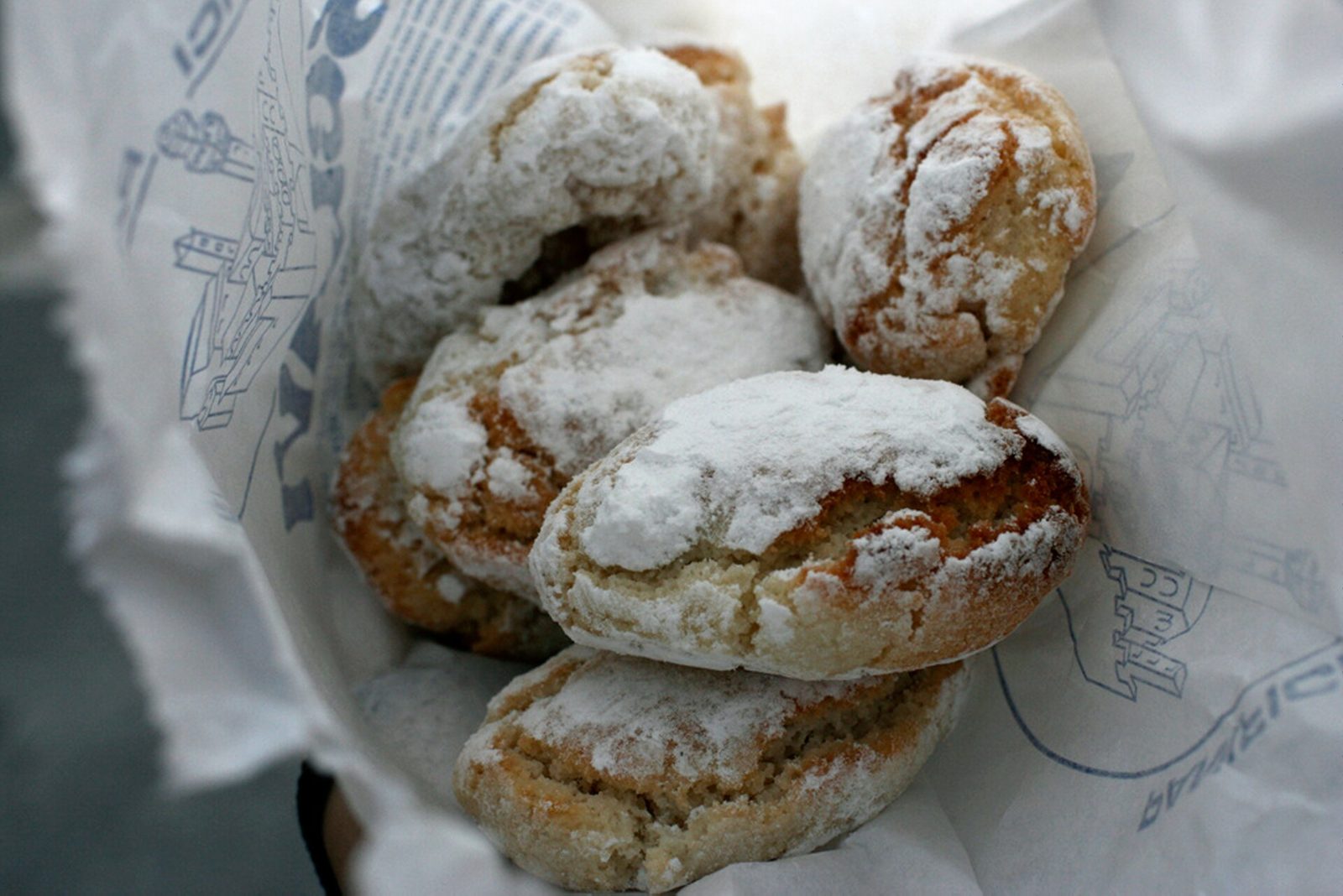
The ricciarello is what happens when almond paste is given a biscuit’s shape and none of its discipline: no flour, no fat, no second bake, and a crumb that must stay tender under a shell that must crack. The three-temperature bake manages that contradiction. Siena won the ricciarello an IGP in 2010 — the only cookie in our atlas with its own protected name besides the cantuccino — and the papers live on the Toscana plate.
This style has a home and a history — see Toscana in the Atlas for its class, its dunking wine, and its papers.
Documented, not yet sealed. The Tested 3× mark arrives with our own three bakes and their published notes.
Fonti
Ingredienti
Il metodo
Mix almond flour and powdered sugar, then work in the egg whites, zest, lemon juice, vanilla and extract to a firm paste. No whipping — the whites bind, they do not aerate.
Rest the wrapped dough in the refrigerator at least 24 hours, up to three days. Sienese pastry shops treat the rest as an ingredient; the texture cannot be rushed into existence.
Roll a rope about 3 cm thick, cut 20 g pieces, roll each generously in powdered sugar and shape into the flattened rice-grain lozenge the Sienese call a chicco di riso.
Bake in a static oven: 150°C for 5 minutes, 170°C for 5–6 minutes until the sugar coat cracks into its fault lines, then 160°C for a final 5–6 minutes. The inside stays soft — that is the whole point, and why the Atlas classes it a cousin, not a biscotto.
A week to ten days before the centres begin to dry.