
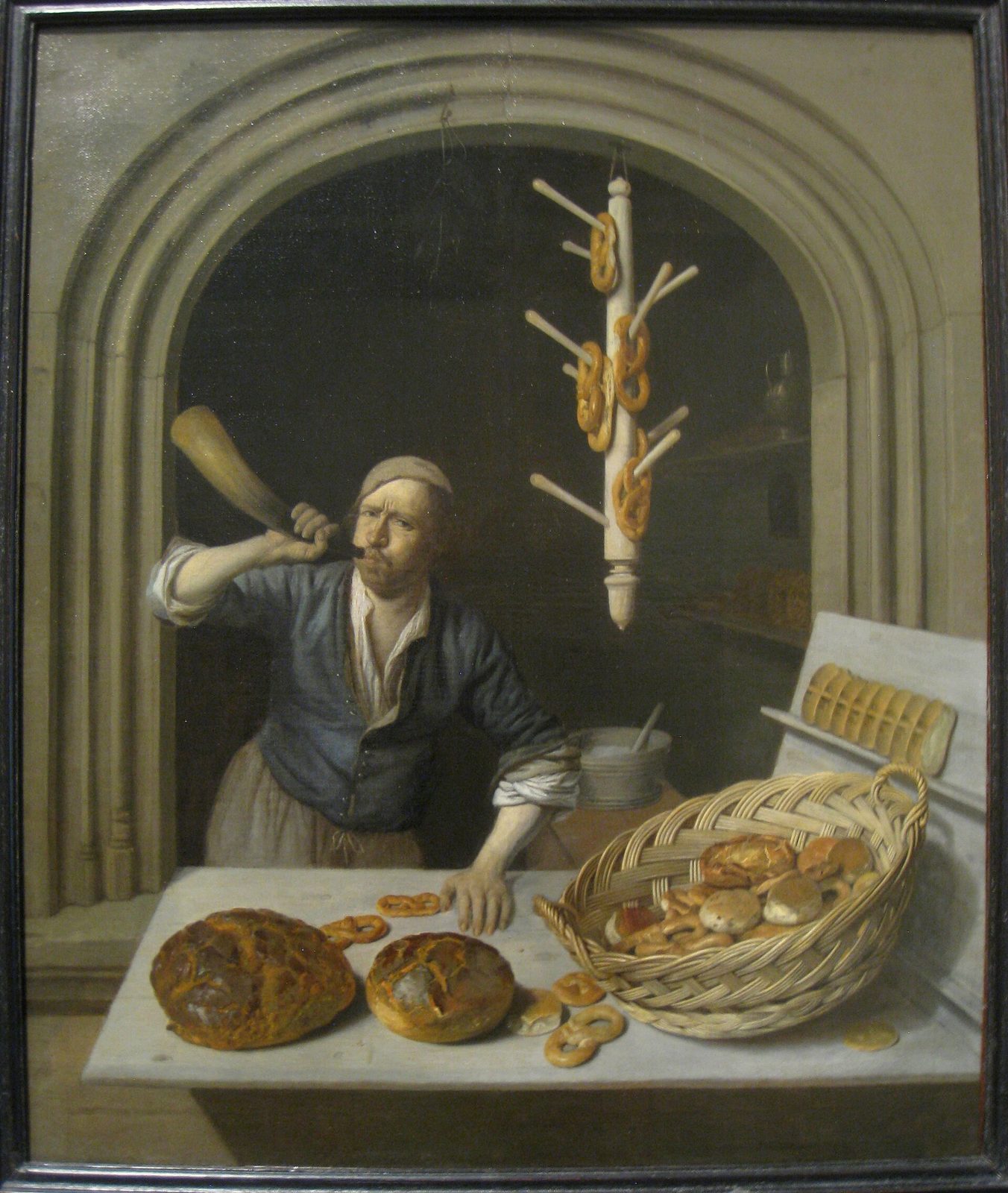
Biscotto descends from the Latin panis biscoctus — bread cooked twice — and the second cooking was never about pleasure. Bake bread, slice it, dry it in the oven again, and you have removed the water that would have rotted it. What remains is nearly imperishable: rations for a legion, stores for a galley, bread for a siege. The Romans provisioned soldiers with a hard ration bread the sources call buccellatum; every Mediterranean navy after them ran on some version of the same idea.
Venice industrialised it. The Republic maintained biscuit ovens for its fleet and a guild of biscuit-makers, the scaleteri, whose product had to survive months at sea. That naval discipline still shows in the city’s signature cookie: the baicolo, a loaf baked, rested for days, sliced wafer-thin and baked again, is a ship’s biscuit that learned manners. On the other coast, Genoa’s port kept its own hard bread, and in Camogli a bakery still makes the galletta del marinaio — the sailor’s biscuit, unsweetened and unsentimental.
Three roads to the biscuit tin
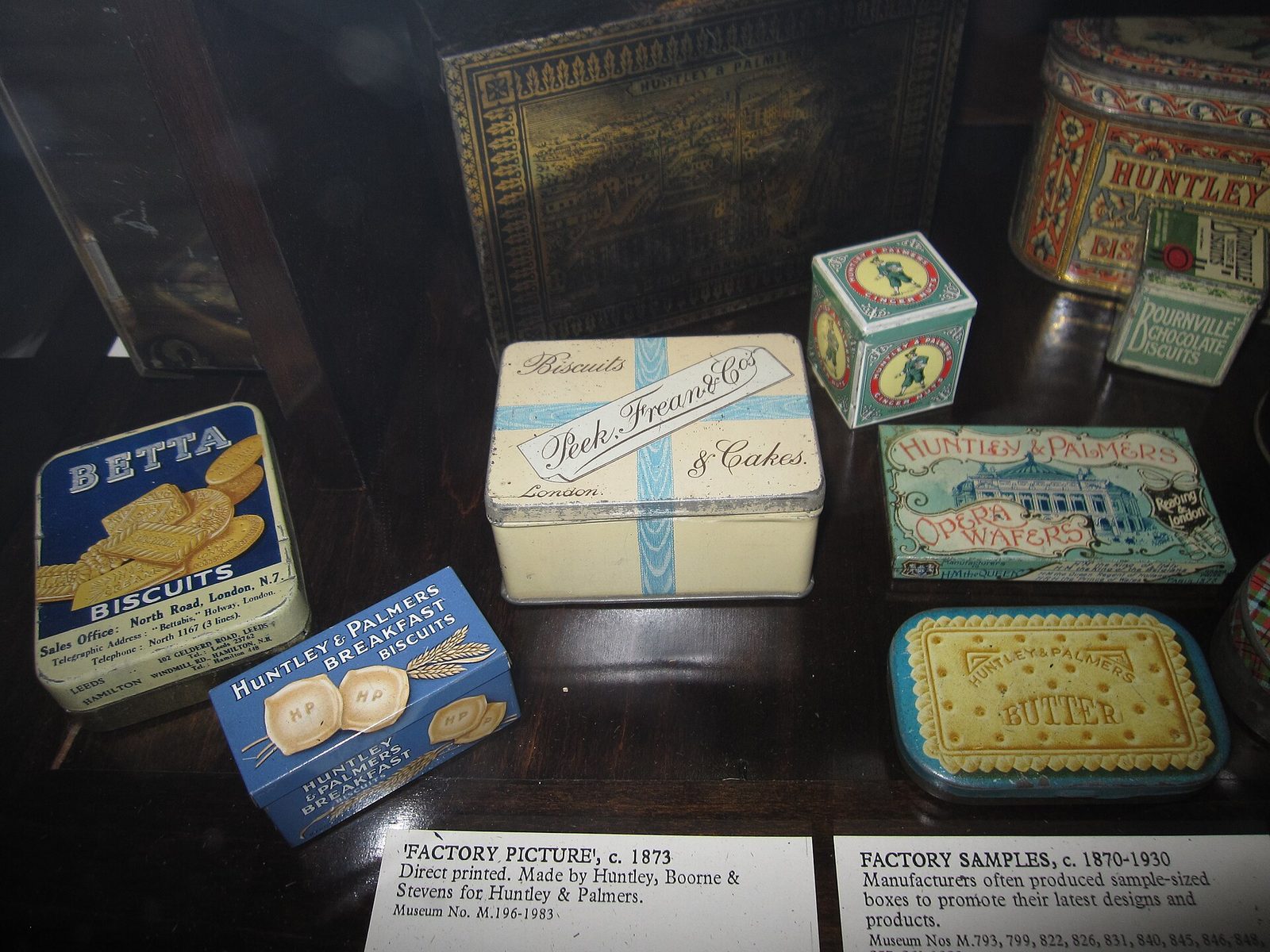
Italy’s dry-biscuit traditions did not descend from one ancestor but from three, and the atlas is organized around the difference. The naval line gave the technique: twice-baked, moisture out, time defeated. The monastic line gave the austerity: Lenten and memorial biscuits — the quaresimali, the ossa di morto, the papassini of All Saints — built lean because the calendar demanded it. And the spice line, running from the Roman must-cake through every medieval fair, gave Italy its mostaccioli in a dozen regional dialects, honey-hard and built for keeping in a saddlebag.
None of these was a cookie in the modern sense. The thing we now call biscotti — sweet, almond-set, sliced on the bias, sold beside coffee — is young. It has a birthplace and very nearly a birthday.
Prato, 1858
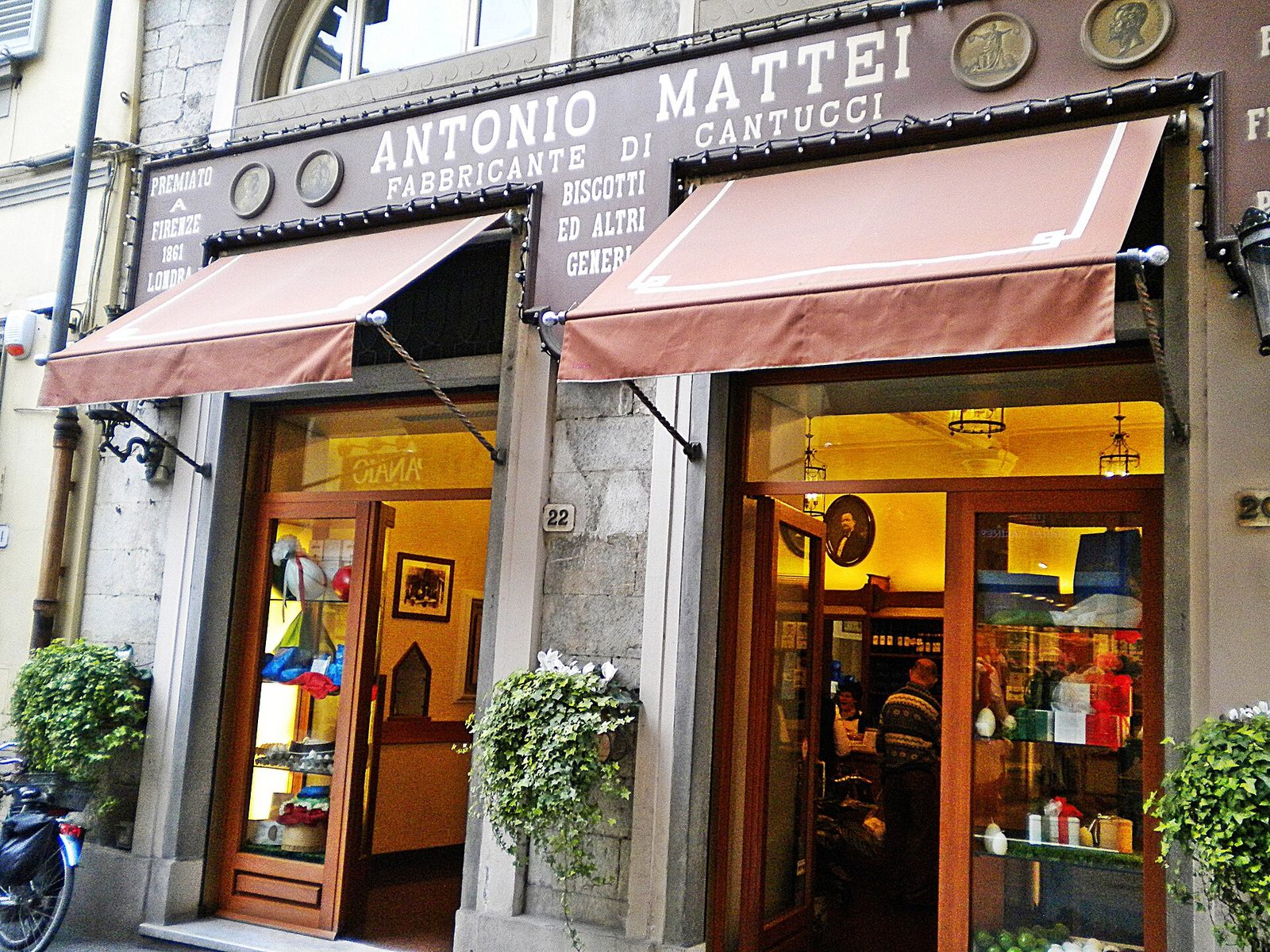
Antonio Mattei opened his biscottificio on Via Ricasoli in Prato in 1858 and fixed the formula the world now recognizes: flour, sugar, eggs, almonds, pine nuts — nothing else. Pellegrino Artusi, publishing the cornerstone of Italian home cooking in 1891, credited Mattei by name; the shop, run by the Pandolfini family since 1908, still sells the same five ingredients from the same street. What the 1861 and 1867 award catalogues actually record about him is here — and it is not the story usually told. When Italians argue about what a “real” cantuccio is — and they do, in legally binding form — Mattei’s counter is the ground everyone argues over.
The word is older than the shop, and we can date the moment it changed meaning. The Accademia della Crusca’s dictionary ran cantuccio from its first edition of 1612, but only as the diminutive of canto — a corner, a nook, the hidden place where the brooms stand. The biscuit is not there. It is not in the second edition of 1623 either. It appears for the first time in the third edition of 1691, as a numbered sub-sense under the corner: “Biscotto a fette, di fior di farina, con zucchero e chiara d’uovo” — a sliced biscuit of fine flour, sugar and egg white.
Read that formula again, because it settles an argument. There are no almonds in it. The earliest lexicographic record of the cantuccio as a biscuit describes three ingredients, and the nut that every modern definition treats as essential is not among them. The same 1691 entry records two words the fourth edition would later drop: pan cantucciato, bread biscotted in the manner of a cantuccio, and cantucciaio — the man who makes them. By 1691 it was a trade with a name.
The term appears in correspondence earlier still: Galileo, before 1642, thanking someone for four flasks of greco wine and fifty cantucci. But a word is not a recipe. Between the three-ingredient biscuit of 1691 and the almond-studded slice on a caffè saucer stands two centuries of quiet revision, and most of it happened in Prato.
The correction worth making
So when an American article tells you biscotti “sustained the Roman legions,” it is half right in the way that matters least. The technique is Roman. The cookie is nineteenth-century Tuscan. Hardtack and cantucci share a method the way a cart and a racing bicycle share the wheel. The invention is real; the pleasure took another eighteen centuries of work.
“The twice-baking technique is ancient and naval; the biscotti cookie itself is nineteenth-century Tuscan, fixed in its modern form at Antonio Mattei’s Prato shop, opened 1858 and credited by Artusi in 1891. The word cantuccio is recorded as a biscuit for the first time in the Accademia della Crusca’s third edition of 1691 — flour, sugar and egg white, with no almonds in the definition.”
Sources
- Pellegrino Artusi, La scienza in cucina (1891) — the twice-baked recipe n. 573
- VoSLIG / AtLiTeG — the historical lexicon entry for “cantuccio”
- Accademia della Crusca, third edition (1691) — the entry for “cantuccio”
- Crusca, first edition (1612) — the same headword, with no biscuit in it
- CiboToday — the baicolo’s history and method (Italian)
- CiboToday — the galletta del marinaio still baked in Camogli (Italian)
- intoscana — Biscottificio Antonio Mattei at 160 (Italian)
A note on what is not here: the exhibition medals attributed to Mattei at Florence 1861 and Paris 1867 are part of this story; they wait for a separate piece, once we have read the primary award catalogues with our own eyes.