
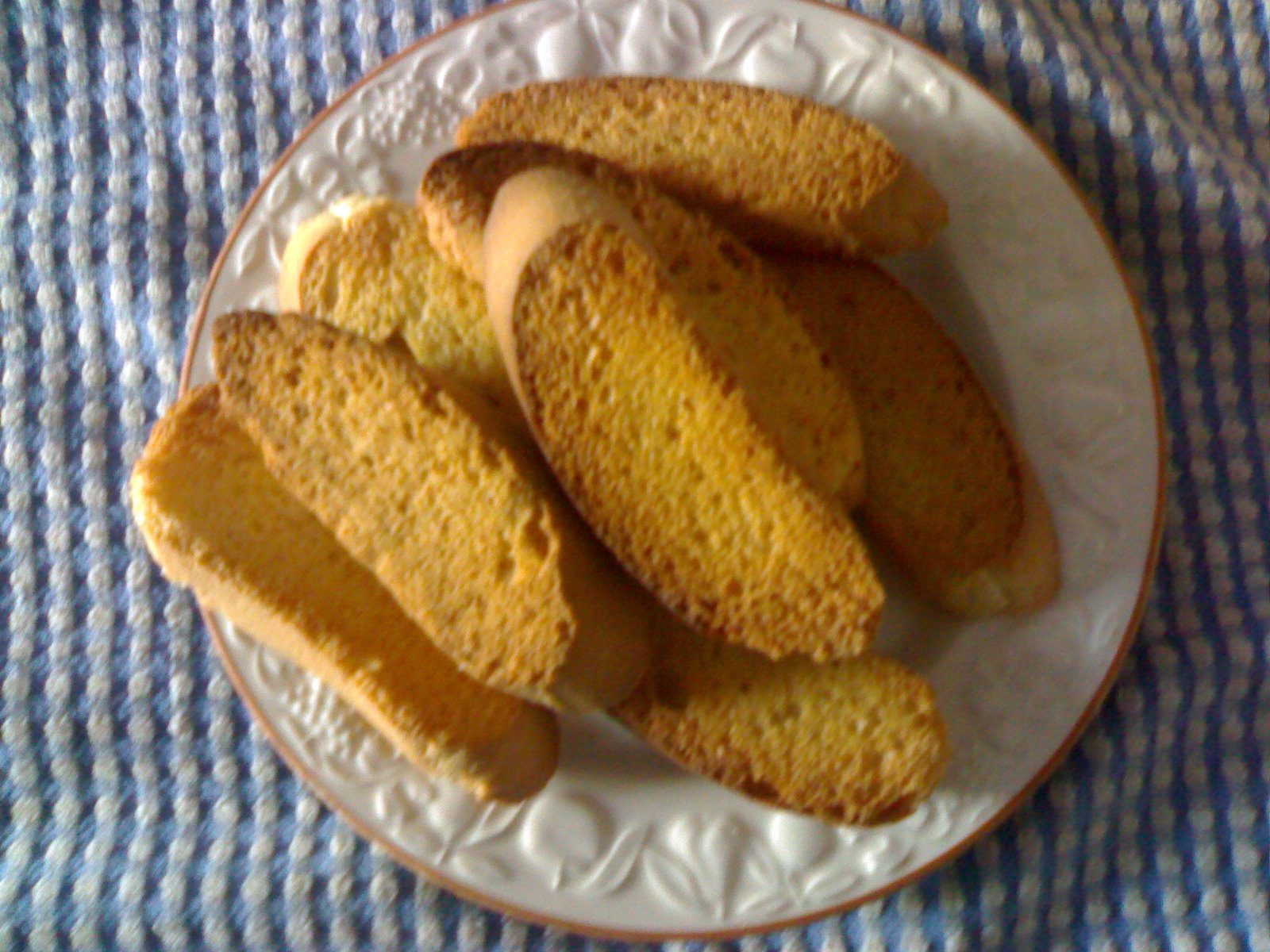
A true rusk and a true twice-bake: fennel-seed leavened loaf, sliced, re-toasted until it rings. Tradition ties the name to Genoa’s Lagaccio district and dates the biscuit to 1593 — and if the date holds, that is four centuries of Genoese breakfasts.
Liguria
The northern anchor of the literal category — and the port where the ship’s biscuit is still baked.
Anise dunking biscuits, cut from a baked slab and dried again — biscotti da inzuppo, for white wine or a sweet passito. A correction: we had these at Class A as Ligurian. The national register places anicini in Sardegna, Calabria and the Marche, and none of Liguria’s seventy-five registered bakery products is one. Genoese households bake them; the region has never registered them.
Not sweet at all — and indispensable: the living ship’s biscuit, still baked in Camogli. The direct descendant of the hardtack that started this whole family, and proof the lineage never died.
Flower-shaped shortbread dusted white. A famous Ligurian, a single bake, a cousin.
The documents behind Liguria’s entries — read them in full:
2 recipes on this site come from Liguria, stated in baker’s percentages and honest about which have been through the oven three times and which have not:
Fonti di questa tavola
The atlas cites Italian primary and regional sources throughout. Claims resting on tradition rather than documents are phrased as claims; entries awaiting confirmation say so on their face.