
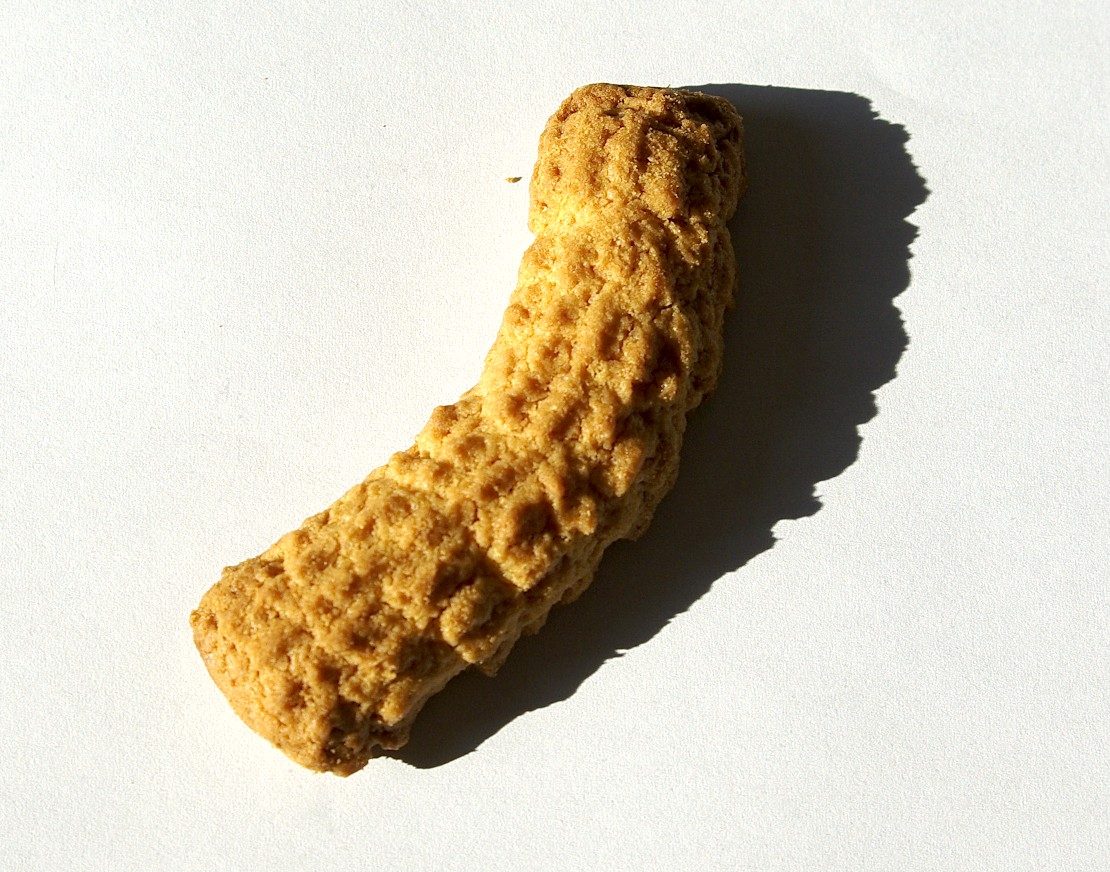
One of Italy’s oldest documented biscuit traditions, with a convent origin claimed in the sixteenth century. The town’s own boast is literal: "i veri bis-cotti" — the truly twice-cooked. The modern featherweight version bakes once, but its name remembers the second oven. Direct ancestor of the industrial Pavesini.
Piemonte
A convent that claims the true bis-cotti, a moustache-shaped biscuit born in 1878, and cornmeal everywhere.
Invented by Domenico Rossi in 1878: a cornmeal-butter dough piped into a bent rod — legend says the moustache of Vittorio Emanuele II. Dunked in milk, barolo chinato, or zabaione.
Cornmeal butter biscuits of the Cuneo valleys, the classic companion to zabaione. Meliga is the local word for maize, and the biscuit tastes of little else — which is the idea.
The "health biscuits" — an enriched loaf sliced and returned to the oven until rusk-dry. Canonized by Artusi in 1891, recipe number 573: a true twice-bake for the breakfast table.
Sugared twists of leavened bread dough from the grissino ovens of the Lanzo valleys. One bake, caramelized edges, and a place at every Piedmont tea.
Fonti di questa tavola
The atlas cites Italian primary and regional sources throughout. Claims resting on tradition rather than documents are phrased as claims; entries awaiting confirmation say so on their face.